
Here’s how big grocery stores are curbing Norwalk’s growing hunger
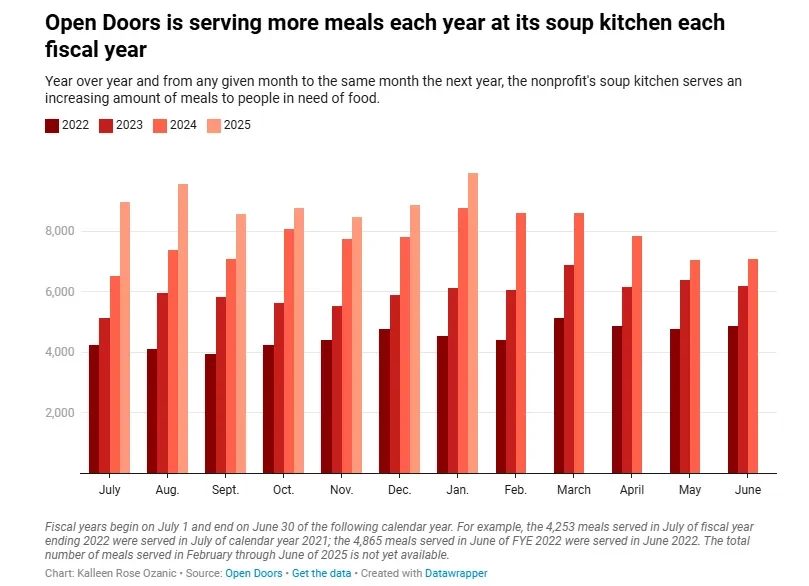
“You’re going to find food providers really struggling to meet demand,” Open Doors CEO Michele Conderino said. “The demand is so high and the cost is so high.”
The nonprofit’s yearly budget has skyrocketed to feed hungry locals.
Before COVID, Open Doors’ annual food-buying budget came in at approximately $100,000, Conderino said. For this fiscal year, the nonprofit has budgeted $230,000 to buy food as part of its $889,300 operating costs, she said. And even that is offset with nearly $700,000 worth of donated food, she said.
These are not costs that Open Doors, or Norwalkers, can afford to cut, Conderino said.
“People are trying to figure out how they can save themselves a bit of money every day,” she said. “That’s how close so many people are to the brink of losing housing stability.”
Saving $5 daily by getting a meal at Open Doors instead of buying groceries adds up to money that can be spent on rent or other items, Conderino said. But hunger is not just a problem for adults managing their budgets, she said.
“There are a lot more families coming in,” she said. “Sometimes children getting off the bus and coming over and getting food before they go home.”
Role of grocery stores
On Tuesday, Conderino said volunteers from Wegmans, the city’s not-yet-open new grocery store, showed up to help at Open Doors.
Once the store opens, according to Emily Gee, Norwalk store manager, it will partner with local food banks and food service providers to do a daily pickup of perishable, unsealable food products each morning.
Cody Nunn, Norwalk service manager, said that continuously staying in contact with local nonprofits and organizations is key to understanding local needs. Each fall, Gee said Wegmans will also run a “Check Out Hunger” campaign, when shoppers can scan a product’s barcode so the store can donate that item.
A Stop & Shop spokesperson said the chain, which has two stores in Norwalk, also tries to put a dent in local hunger with a food pantry at Norwalk High School managed by SAVE, a nonprofit that serves the city’s youth, according to its website. The spokesperson said Stop & Shop has donated $15,000 since launching the pantry in 2021.
The chain has also led fundraising efforts to benefit 13 organizations that serve Norwalk, the spokesperson said, including Open Doors, Filling in the Blanks and others.
Shoprite also has its own food philanthropy programs, according to Tom Cingari, produce, floral, and e-commerce vice president at Cingari Family Markets, which owns the store and others regionally.
Cingari said his family’s company has donated food to pantries, soup kitchens, food service providers and other social services providers in Norwalk and over 1 million pounds of food to CT FoodShare and the Food Bank of Lower Fairfield County.
“This equates to roughly 830,000 meals per year,” Cingari said in an email.
He said his stores also have food service providers pick up donations of unsold meat, produce, dairy, bakery, food service, seafood, and nonperishable items three to four times weekly.
And at Stew Leonard’s, spokesperson Meghan Bell said customers can regularly round up their totals at the register to help fight hunger; recent designees include Open Doors and Filling in the Blanks, Bell said in an email.
“Our largest act of service to the Norwalk community and beyond is our annual Turkey Brigade, which is held the week before Thanksgiving at all 8 of our store locations,” Bell said. “Stew Leonard’s donates more than 3,000 turkeys — about 800 of which are given to local nonprofits in and around Norwalk.”
Read more at https://www.thehour.com/news/article/norwalk-hunger-ct-wegmans-grocery-stores-20153803.php