
CT renters are crushed by ‘huge disparity’ between housing costs and wages, advocates say
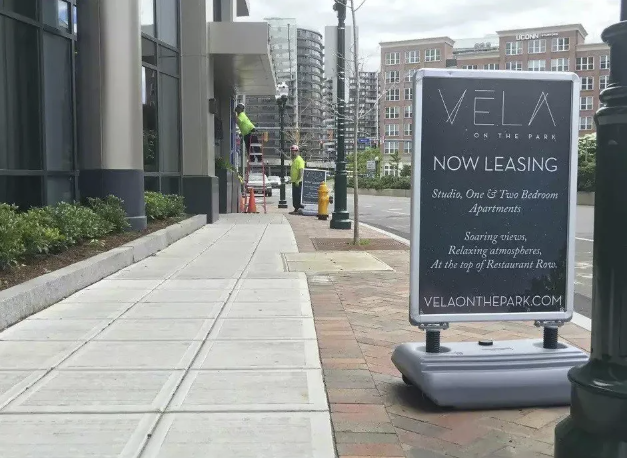
The lack of affordable inventory is made worse when the rentals available are so expensive — while the National Low Income Housing Coalition reports that an affordable two-bedroom in Connecticut costs $1,796, the average cost of a two-bedroom unit in August was $2,186 a month, according to Apartments.com.
Wages aren’t meeting the cost of housing, said Michele Conderino, executive director of Open Doors, which operates a homeless shelter in Norwalk. Minimum-wage workers in Connecticut started making $15 an hour in June 2023, and now make just under $16 per hour — but advocates agree more is needed.
Each year, the National Low Income Housing Coalition releases its Out of Reach report, which documents what a renter needs to earn hourly to pay for a fair market rental unit, based on data from the U.S. Department of Housing and Urban Development.
This year, the average housing wage needed in Connecticut — what a renter needs to earn hourly to pay for an affordable $1,796 two-bedroom apartment — is $34.54, according to the Out of Reach report. That’s 11th highest in the country and $18.85 more per hour than Connecticut’s minimum wage.
Per the federal government and some Connecticut statutes, housing is considered affordable if households pay 30 percent or less of their annual income on housing costs.
Even if a renter were looking at an affordable $1,241 studio, they’d need to earn an average of $23.87 hourly, according to the Out of Reach report. For a $1,455 one-bedroom unit, they must earn on average $27.98 — just 60 cents less than the $28.58 hourly wage Connecticut renters needed last year to pay for a two-bedroom, the report found.
“There’s a huge disparity between what the most common wage is and what you need to subsist,” Conderino said.
Read more at https://www.ctinsider.com/news/article/ct-renters-housing-costs-wages-19777209.php